










We use cookies to provide a better site experience and performance. By using this website, you agree to the use of cookies. For more information, read our Cookies policies.


20 May, 2026

Webtilia somos una agencia de marketing digital que ofrece servicios diseñados para potenciar marcas y generar resultados tangibles. Desde estrategias de SEO y CRO avanzadas hasta campañas de publicidad pagada, social media, creatividad, desarrollo web y Growth Marketing.

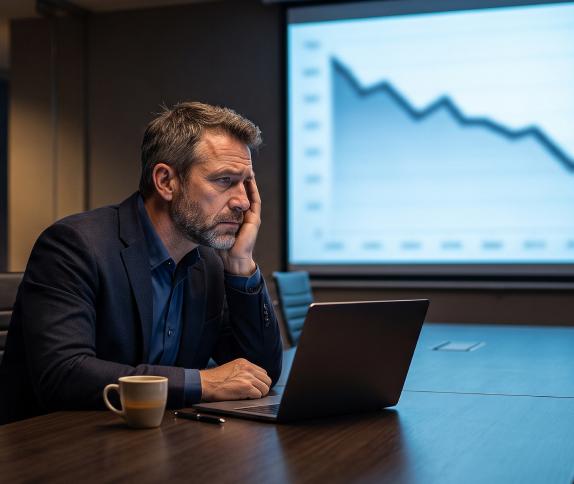
It's one of the most frequent conversations in marketing this year: "Our Google rankings are the same or better, but our traffic dropped. What did we do wrong?" The answer is uncomfortable and reassuring at the same time: often, you didn't do anything wrong. The playing field changed. Understanding why is the first step to stop chasing traffic that won't come back in the same form and start capturing the traffic that actually matters.
The classic symptom of 2026 is a gap between impressions and clicks. Your content still shows up (impressions hold steady or rise), but the share of people who click falls. Studies across hundreds of thousands of keywords estimate that the presence of AI summaries reduces the organic click-through rate by 18% to 34% on average, and several sectors report traffic drops of between 15% and 34%, with B2B and content businesses among the hardest hit.
If this sounds familiar, check your Search Console: if your average positions are stable but your CTR dropped, you're very likely experiencing the zero-click effect. A good exercise is to compare the same quarter of the previous year against the current one, filtering by informational queries. That's almost always where you'll see the biggest loss of clicks, while branded and transactional queries hold up more firmly. That contrast tells you exactly where AI hit you and where you still have defensible traffic.
A zero-click search is one that ends without the user visiting any website, because the results page itself already answered their question. It's not a new phenomenon: featured snippets and knowledge panels have been driving it for years. What's new is the magnitude. In 2026, around 68% of Google searches end without a click, and when an AI summary appears that figure climbs to nearly 83%. In other words, eight out of ten users get their answer without leaving the search engine.
AI Overviews are the AI-generated summaries that Google places at the top of many results. They answer the query in full sentences, often citing a few sources. For the user they're convenient; for your website, they mean that much of the informational click disappears. Research from 2026 estimates that these summaries now appear in around a quarter of searches, and their presence is even higher in sectors like health and B2B technology.
There's also a more aggressive format, the AI conversational mode, where traditional organic results are barely shown at all: if your brand isn't cited within the answer, you have no presence whatsoever. That's where the old idea of "ranking" loses all meaning.
It's worth keeping a few figures on hand to size up the change and explain it to your team or your management:
Here's the hopeful twist. The clicks that survive tend to be higher quality: someone who clicks after reading a summary is already more informed and is looking for depth, which means they're closer to buying. Some studies find that these visitors convert notably better. And, above all, brands that are cited within AI summaries earn more branded clicks and convert at rates several times higher. The takeaway is clear: the goal stopped being "bring in more visits" and became "be the source the AI cites."
Faced with falling traffic, many companies react by publishing more generic informational content, exactly the kind of content the AI summarizes and that the user no longer needs to click. It's like pouring more water into a leaky bucket. The right response isn't to produce more of the same, but to produce differently: fewer articles competing to answer questions the AI already answers, and more in-depth content (with proprietary data, comparisons, and real experience) that the AI wants to cite and that the high-intent user actually wants to read in full.
It's also worth reviewing your dependence on the informational organic channel. If 100% of your acquisition relied on blog articles answering basic questions, your model is fragile in the face of AI search. Diversifying toward transactional content, brand, email, and community reduces that risk and makes you less vulnerable to the next algorithm or behavior shift.
The traffic drop isn't the end of your digital strategy; it's the signal that it needs to evolve. The companies that accept the new board and optimize to be cited, not just to rank, don't just stop the decline: they capture the higher-value traffic their competitors are letting slip away.
✔ If your positions are stable but your CTR is falling, the culprit is usually zero-click.
✔ ~68% of searches end without a click; ~83% when there's an AI summary.
✔ The clicks that survive convert better: they're more informed users.
✔ Brands cited by AI earn more branded clicks and better conversion.
✔ The goal changed: from bringing in more visits to being the source the AI cites.
Why is my web traffic falling if my rankings didn't drop?
Because more and more searches are resolved inside the search engine itself. AI summaries and featured snippets answer the query without the user clicking. You can keep good positions and still receive fewer visits: it's the zero-click effect.
What is a zero-click search?
It's a search that ends without the user visiting any website, because the results page already gave them the answer through an AI summary, a featured snippet, or a knowledge panel. In 2026 they account for about 68% of Google searches.
Do AI Overviews affect all sectors equally?
No. They appear more often in informational queries and in sectors like health and B2B technology, and less in purely transactional or branded queries. That's why it's worth identifying which part of your keywords is most exposed.
How do I recover the lost traffic?
It isn't "recovered" in the same form: it's replaced with higher-value traffic. Focus on the high-intent queries that still generate clicks, and work to be cited in the AI answers for the rest. That's the new goal.
Did your traffic drop and you don't know how much is zero-click and how much is lost opportunity? At Webtilia we audit your Search Console and your exposure to AI search, and hand you a plan to capture the traffic that actually converts. Let's talk.
